Workplaces across Ontario are turning to group BLS training as a practical way to prepare their teams for medical emergencies. Rather than sending each employee to a separate public class, many employers arrange training for the whole team at once. This approach keeps skills consistent, simplifies scheduling, and ensures everyone holds the same certification. For healthcare workplaces in particular, group BLS training in Ontario has become an important part of meeting employer requirements.
What Is Group BLS Training?
Basic Life Support, or BLS, is a certification designed for healthcare providers and others who may need to respond to medical emergencies in a professional capacity. The Canadian Red Cross describes the BLS course as one that takes learners through essential steps such as performing a rapid assessment, applying basic life support skills, and using rapid defibrillation. The Heart and Stroke Foundation adds that BLS training teaches both the theoretical and hands-on skills needed to respond to medical emergencies, with the goal of driving the best possible patient outcomes.
When delivered as a group course, BLS training is offered to an entire workplace at once. Group BLS training in Ontario with certification is available from several recognized providers. These sessions use the same course content as public classes, but they can be tailored to a team’s schedule and delivered on terms that work for the employer.
Why Ontario Workplaces Book Group BLS Training
There are several practical reasons why employers arrange group BLS training instead of individual public classes.
First, consistency. When a team trains together, everyone learns the same techniques and responds to the same scenarios. This creates a shared baseline for emergency response across shifts and departments.
Second, convenience. BLS and Standard First Aid courses are offered across Ontario with weekday, evening, and weekend options, according to Aspire First Aid Guide Training. Group bookings give employers the flexibility to schedule around operational demands instead of asking staff to arrange their own training.
Third, workplace readiness. Group BLS training in Ontario focuses on real-world skills that teams can use with confidence. Employers in healthcare fields often need BLS certification for their staff, and a group booking is an efficient way to meet that requirement for multiple employees at once.
What a BLS Course Covers
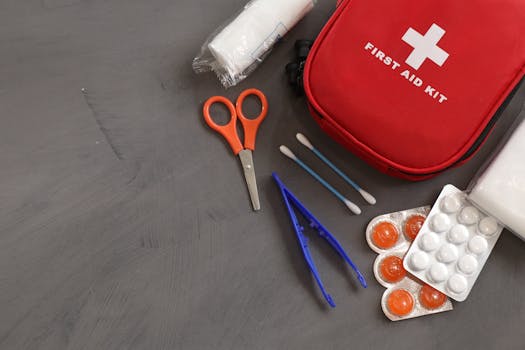
A BLS course is more advanced than a general CPR class. The Canadian Red Cross course description highlights several core components:
- Rapid assessment of an unresponsive person
- Basic life support skills, including CPR techniques
- Rapid defibrillation
The Heart and Stroke Foundation describes BLS as a combination of theoretical knowledge and hands-on practice. Learners are expected to understand why each step matters, not just how to perform it. This dual focus is what makes BLS training so valuable for teams that may encounter medical emergencies in professional settings.
Most group BLS sessions follow the same structure as public courses, with an instructor guiding participants through demonstrations, practice time, and scenario-based learning. Some providers also offer blended formats that combine online learning with an in-class hands-on session. Aspire First Aid Guide Training, for example, offers certification in class or through blended classes that combine online and hands-on learning.
On-Site Group Training vs. Public Classes
Employers in Ontario have two main options for group BLS training: on-site sessions or public classes with a group booking.
On-site training brings an instructor to the workplace. This is a good fit for teams that cannot easily travel to a training centre, or for workplaces that want the training to feel directly relevant to their environment. The Canadian Red Cross offers workplace and corporate first aid courses, and several Ontario providers accept private course requests. First Aid Clinics of Canada, which serves the Golden Horseshoe as a WSIB-approved first aid, CPR, and HCP/BLS training provider, offers a private course request option for teams. Coast2Coast also provides Canadian Red Cross-certified training across four GTA locations, with options to book training for groups.
Public classes with a group booking are another route. Providers such as Aspire First Aid Guide Training run BLS classes in Mississauga, Hamilton, and St. Catharines, and many organizations offer courses across Ontario. The advantage of group enrollment in a public class is that it may open up more date options, especially when a workplace needs only a small number of staff certified.
BLS vs. CPR: Which One Does Your Team Need?
A common point of confusion for Ontario employers is the difference between BLS and CPR. The two are related, but they are not the same.
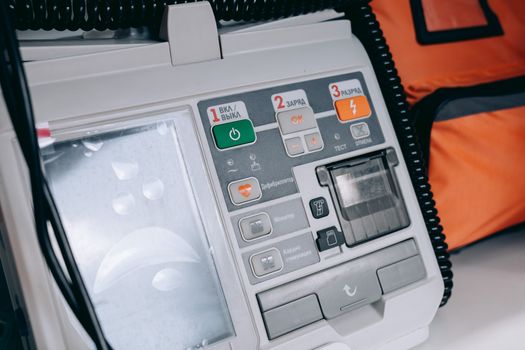
CPR certification, such as CPR/AED Level C, is designed for the general public and for general workplace requirements. It teaches CPR techniques and the use of an automated external defibrillator.
BLS is a higher-level certification for healthcare providers. It covers the same fundamentals but adds rapid assessment, more advanced skills, and a stronger emphasis on rapid defibrillation. According to the 2025 analysis published by Aspire First Aid Guide Training, Ontario healthcare employers commonly ask for BLS rather than general CPR when hiring clinical staff.
If you are unsure which course your workplace needs, ask the training provider for guidance. Many providers, including the Canadian Red Cross and the Heart and Stroke Foundation, can help you match the right certification to your team’s roles and responsibilities.
Group BLS Training Cost and Booking Considerations
Pricing for BLS training varies by provider, location, and delivery format. First Aid Works lists a Basic Life Support (BLS) course at CAD$79.95 and a BLS Renewal option for recertification. Heart and Stroke Foundation course listings show examples such as a BLS course at $60.00 and a BLS Blended Provider course at $295.00 at a specific Ontario learning centre. These are individual course prices, not group rates.
For group bookings, most providers quote a rate based on class size and location. Since rates change and depend on your team’s needs, the best approach is to contact a few providers and ask for a current quote. You may also want to confirm whether the provider is WSIB-approved, as some Ontario employers require this. First Aid Clinics of Canada is described as WSIB approved, and Coast2Coast offers a WSIB-approved program.
Other related courses, such as Intermediate First Aid Blended at CAD$149.95 and Basic First Aid at CAD$124.95 at First Aid Works, may be relevant if your workplace also needs general first aid coverage alongside BLS certification.
When comparing providers, consider:
- Whether the course is certified by the Canadian Red Cross or the Heart and Stroke Foundation
- Whether training can be delivered on-site
- Availability of weekday, evening, and weekend options
- Whether the provider supports group registration or private course requests
- Whether renewal courses are available for existing BLS holders
The Canadian Red Cross delivers first aid and CPR courses throughout Ontario and can be reached at 1-877-356-3226 for course information. Heart and Stroke Foundation courses are also available through its online course finder.
Arranging group BLS training is often the first step in a broader workplace safety plan. Once your team is certified, think about how these skills will be maintained. Renewal courses, regular practice, and clear emergency protocols all help ensure that certification translates into confidence during a real incident. For Ontario employers, the key is to choose a certified provider, confirm the right course level, and book early to secure the dates your team needs.
Frequently Asked Questions
How long is BLS certification valid?
BLS certification is valid for a limited period, and renewal is expected for anyone who needs to keep their skills current. Training providers such as First Aid Works offer dedicated BLS Renewal courses for this purpose. The exact validity period can depend on the certifying body and the employer’s policy, so check your card or contact your training provider for the specific date.
What is the difference between BLS and CPR training?
CPR certification, including CPR/AED Level C, is the standard for general public and general workplace requirements. BLS training goes further by adding rapid assessment and rapid defibrillation, and it is designed for healthcare providers and professional responders. Ontario healthcare employers commonly require BLS for clinical roles, while general workplace first aid typically relies on CPR and first aid certification.
Can our workplace book on-site BLS training?
Yes. Several Ontario providers offer private course requests and group delivery for BLS training. First Aid Clinics of Canada, a WSIB-approved provider in the Golden Horseshoe, accepts private course requests, and the Canadian Red Cross offers workplace and corporate first aid courses. Coast2Coast also offers group training options at GTA locations. Contact a provider directly to confirm on-site availability for your area and to discuss scheduling.
How much does group BLS training cost in Ontario?
Individual BLS courses are listed at prices such as CAD$79.95 at First Aid Works, while Heart and Stroke Foundation listings show examples around $60.00 for BLS and $295.00 for a BLS Blended Provider course. Group rates depend on team size, location, and provider, so most companies quote these individually. Request a quote from a few certified providers to compare pricing for your team.