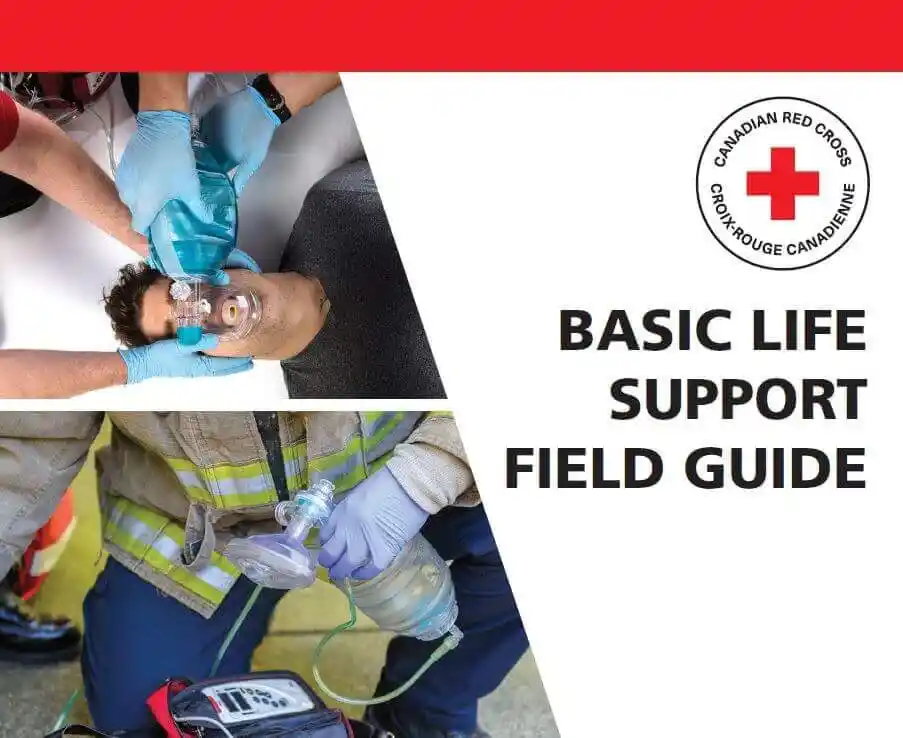
Canadian Red Cross Certified · NOCP Standards · Dual Certification · FR-to-EMR Bridging Available
Aspire First Aid Guide Training is Mississauga's trusted provider of the Canadian Red Cross Emergency Medical Responder program. Advance your pre-hospital care skills to meet national NOCP standards. Dual certification: 3-year EMR + 1-year BLS. Full program and condensed FR-to-EMR bridging pathway available.
Mon–Sun 8 am–5:30 pm · info@fagt.ca
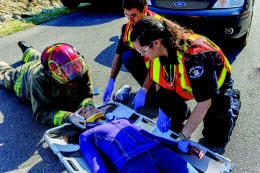
Whether you are starting fresh or upgrading from an existing First Responder certificate, there is a pathway designed for you.
80–120 Hours
Comprehensive program for those entering the EMR field without prior professional responder training. Covers all NOCP competencies from the ground up.
Prerequisite
Valid Standard First Aid with CPR Level C
40 Hours Condensed
The fast-track upgrade for certified First Responders. Complete the condensed bridging pathway and earn full EMR certification in just 40 hours.
Prerequisite
Valid Canadian Red Cross First Responder certificate
The Canadian Red Cross EMR course equips you with the skills to assess, intervene, and provide continuous care to patients in the workplace, while responding to calls, or during transport to a healthcare facility. The program meets national NOCP standards and prepares you for paramedic-adjacent and emergency services roles.
All sessions are led by certified Canadian Red Cross instructors with real-world emergency response experience. Small class sizes ensure maximum hands-on practice time and individual feedback on skills and scenarios.
Fully in-class at our Mississauga training centre. Combines video instruction, live demonstrations, guided skills practice, and two fully evaluated practical scenarios one medical, one trauma.
Training Methods Used
The National Occupational Competency Profile (NOCP) for Emergency Medical Responders is the national benchmark established by the Paramedic Association of Canada. Completing a Red Cross EMR course that meets NOCP standards means your certification is recognised by EMS employers, emergency services, and paramedic programs across all Canadian provinces.
Cross-Province Validity
NOCP-standard EMR certification is accepted by EMS employers and emergency services across all Canadian provinces not just Ontario.
Academic Stepping Stone
Many paramedic college programs in Ontario recognise NOCP EMR as a prerequisite or give advanced standing confirm with your target program.
EMR + BLS Issued
Graduates receive two credentials: a 3-year Red Cross EMR certificate and a 1-year BLS certificate. Both are required by most EMS employers.
High-Value Credential
Industrial response teams, event medical services, security firms, and EMS support services actively seek candidates with NOCP EMR certification.
The EMR course is designed for individuals moving into advanced pre-hospital care roles or upgrading existing First Responder credentials.
Individuals pursuing paramedic programs or entry level EMS positions who need NOCP standard EMR as a prerequisite or stepping stone.
Offshore workers, mining site medics, and industrial emergency responders where EMR-level training is required by employer policy or regulation.
Event medics, festival medical staff, and large venue safety teams needing advanced patient assessment and intervention credentials.
Certified FR holders who want to advance their credentials through the condensed 40-hour bridging pathway faster route to full EMR certification.
PSWs, LPNs, medical assistants, and allied health workers expanding their emergency response skills to the highest pre-hospital level.
High-risk security professionals, tactical response teams, and corrections officers requiring advanced pre-hospital care credentials.
The program is structured around six progressive learning areas covering all NOCP Emergency Medical Responder competencies.
All four requirements must be met. Successful graduates receive two Red Cross certificates.
4 Requirements
Both Issued on Completion
| Feature | Emergency Medical Responder (EMR) | First Responder (FR) |
|---|---|---|
| Duration | 80–120 hrs (full) or 40 hrs (bridge) | 40 hours |
| Prerequisites | SFA/CPR-C or valid FR cert | None |
| Level | Advanced NOCP national standard | Foundational pre-hospital care |
| Pharmacology | Yes included | No |
| Certification | 3-yr EMR + 1-yr BLS | 3-yr FR certificate |
| Recertification | 40 hours | 20 hours |
| Best For | EMS, paramedic pathway, industrial medics, event medical | EMS entry, industrial response, public safety |
If you don't have a valid SFA/CPR-C or FR certificate, start with the First Responder course (no prerequisites). Once certified, you can bridge to EMR in just 40 hours through our condensed upgrade pathway.
The following Canadian Red Cross resources support your learning throughout the course.
Included
Canadian Red Cross Emergency Care for Professional Responders the definitive reference for pre-hospital care, covering all NOCP competency areas.
Optional
Canadian Red Cross Emergency Care for Professional Responders Workbook optional companion for self-paced review and written evaluation preparation.
Select a Date & Book Online
Choose your pathway and date below. For FR-to-EMR bridging, group training, or corporate scheduling, contact us directly.
Booking not loading? (289) 890-2898 or info@fagt.ca
No prior EMR training is required to enrol in the full program.
NOCP stands for National Occupational Competency Profile for Emergency Medical Responders the national benchmark set by the Paramedic Association of Canada. Completing an NOCP-standard EMR course means your certification is recognised by EMS employers, emergency services, and paramedic programs across all Canadian provinces, not just Ontario.
Both certificates are issued digitally upon successful completion.
Yes. Holders of a valid, non-expired Canadian Red Cross First Responder certificate can bridge to EMR through our condensed 40-hour FR-to-EMR upgrade pathway. Contact us at (289) 890-2898 or info@fagt.ca for current bridging dates in Mississauga.
EMR recertification is 40 hours. Note that your BLS certificate (1-year validity) must also be renewed annually many EMS employers require current BLS at all times. Contact us for current recertification dates in Mississauga.
First Responder (FR): 40 hours, no prerequisites. Foundational pre-hospital care assessment, BLS/CPR, hemorrhage, medical and trauma emergencies.
Emergency Medical Responder (EMR): More advanced, meets NOCP national standards, includes pharmacology and BLS certification, requires SFA/CPR-C or FR cert. Prepares you for paramedic-adjacent roles, transport-related care, and higher-acuity patient interventions.
No. Admissions requirements vary by school, employer, and province. NOCP-standard EMR is widely recognised and may satisfy prerequisites or earn advanced standing at some programs always confirm specific requirements directly with your target paramedic school or EMS employer.
At our Mississauga training centre: 39 Dundas St E, Unit 206, Mississauga, ON L5A 1V9. Accessible by MiWay transit, with nearby parking. Easy access from Hwy 403, 401, and the QEW.
Phone / WhatsApp
+1 (289) 890-2898Office Hours
Mon–Sun: 8:00 AM - 5:30 PMAccess
Easy access from Hwy 403, 401 & QEW