
If you hold a Canadian Red Cross First Responder certification and work or volunteer in the Mississauga area, keeping that credential current is a responsibility that should not be put off. A First Responder qualification equips you to manage serious emergencies until advanced medical help arrives, and regular recertification ensures your skills and knowledge remain sharp. In Mississauga, first responder recertification is available through certified training providers, and understanding the time commitment, format, and renewal requirements will help you plan ahead.
Understanding First Responder Recertification in Mississauga
The Canadian Red Cross First Responder course is an advanced level of first aid training that goes well beyond the standard workplace first aid programs. The initial certification course requires 40 hours of instruction, depending on the jurisdiction. Recertification for this credential is shorter, requiring 20 hours of training. In Mississauga, courses offered by Aspire First Aid Guide Training (FAGT) follow the same 20-hour recertification standard, giving you a clear idea of what to expect when you register.
Your First Responder certification from the Canadian Red Cross is valid for three years. Setting a reminder about 6 months before your expiry date is a good habit, as it allows you to find a convenient course without the pressure of an expired card. Employers, fire departments, police services, and other agencies that require First Responder credentials typically expect continuous valid certification, so letting yours lapse could mean additional costs and time to retake the full 40-hour initial course instead of the shorter recertification.
How First Responder Recertification Differs from Other Certifications
Many people in Mississauga who are already trained in first aid may hold a Standard First Aid with CPR-C certification. It is important not to confuse the two when booking recertification. Standard First Aid recertification in Mississauga is a one-day, 8-hour in-class session. By contrast, First Responder recertification is 20 hours, making it a more substantial commitment. Mixing up the two could mean you sign up for a course that does not meet the requirements for your First Responder certification.
Another common point of confusion is the difference between First Responder recertification and Emergency Medical Responder (EMR) recertification. EMR is a higher-level designation that involves more advanced skills. In Mississauga, the recertification course for EMR is approximately 40 hours, which is double the length of the First Responder recertification. If you hold an EMR certification, you must take the longer recertification; a First Responder recertification will not renew your EMR credential. Check the details on the training provider’s website to ensure you register for the correct level.
To help you see the differences at a glance, here is a comparison based on the information available from the Canadian Red Cross and training providers in Mississauga:
| Certification Type | Initial Course Hours | Recertification Hours | Validity Period |
|---|---|---|---|
| First Responder (Canadian Red Cross) | 40 hours (based on jurisdiction) | 20 hours | 3 years |
| EMR (as offered in Mississauga) | Varies by provider | Approx. 40 hours | Check with provider |
| Standard First Aid with CPR-C (recert) | Typically 14-16 hours initial | 8 hours (in-class, Mississauga) | 3 years |
Because First Responder recertification sits between basic workplace first aid and full paramedical training, providers like FAGT tailor the course content to refreshing critical skills such as patient assessment, airway management, oxygen administration, and spinal immobilization. The 20-hour format allows enough time to practice these skills under instructor supervision and to complete written evaluations.
What to Expect During Your Recertification Course
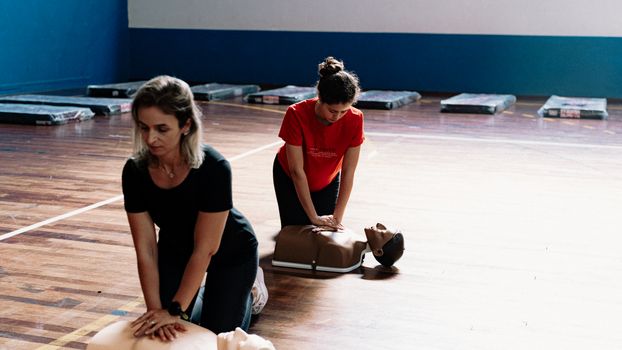
Although specific course schedules vary by training centre, a typical First Responder recertification in Mississauga is delivered over a few days or across a weekend to accommodate shift workers and busy professionals. The Canadian Red Cross requires that recertification includes an in-person component for a skills evaluation. This means that even if a provider offers a blended learning option (online theory plus in-class practical), you will need to attend on-site sessions to demonstrate your abilities.
During the recertification, you can expect to review and practise the following key areas:
- Scene assessment and safety protocols
- Primary and secondary patient surveys
- Airway management and ventilation techniques, including use of bag-valve-mask devices
- CPR and automated external defibrillator (AED) use for adults, children, and infants
- Management of medical emergencies such as heart attack, stroke, diabetic emergencies, and seizures
- Trauma care: bleeding control, splinting, and spinal immobilisation
- Administration of emergency oxygen
- Practical scenarios that integrate multiple skills
Instructors will evaluate your performance and provide feedback. The recertification is designed to reinforce correct techniques and correct any bad habits that may have developed since your last course. Because the course is only 20 hours, trainers move through material efficiently, assuming you already have a good foundational knowledge from your initial certification. It is a good idea to review your manual or notes beforehand so you can focus on hands-on practice rather than theory review.
Keeping Your Certification Current
Once you complete your recertification, your new Canadian Red Cross First Responder certificate will be valid for another three years. Mark the new expiry date on your calendar and consider setting a recurring reminder every 2.5 years to start looking for recertification courses in Mississauga. By planning ahead, you avoid the scramble to find a course when your certification has already expired, and you may also have more choices regarding course dates and formats.
If your certification has been expired for more than a short period, the training provider may require you to take the full 40-hour initial course again rather than the 20-hour recertification. Policies can differ between providers, so if you find yourself with an expired credential, contact Aspire First Aid Guide Training or another Red Cross training partner in Mississauga to ask about their late-renewal options. Some may allow a recertification course if you can demonstrate that your knowledge is current, while others will direct you to a full course.
Maintaining your First Responder certification also means staying physically and mentally prepared to perform the skills under stress. Between recertification cycles, you can refresh your memory by reviewing online resources from the Canadian Red Cross or by attending short CPR/AED update sessions. While these shorter sessions do not count toward recertification, they help keep the most common emergency procedures fresh in your mind.

Frequently Asked Questions
Can I complete first responder recertification entirely online?
No. The Canadian Red Cross requires an in-person skills evaluation for First Responder recertification. Some providers may offer a blended format where you complete theory online and then attend a shorter in-class session for hands-on practice, but you cannot get recertified through an all-online course.
What if my certification has been expired for more than a year?
Most training centres in Mississauga will require you to retake the full First Responder course if your certification has lapsed significantly. Contact the provider directly to discuss your situation. They can advise whether the 20-hour recertification is still an option or if you need to register for the 40-hour initial course.
How much does first responder recertification cost in Mississauga?
Pricing for recertification courses is set by individual training providers. Because exact costs for First Responder recertification were not available in the source materials, it is best to check directly with centres like Aspire First Aid Guide Training for their current rates.
Is EMR recertification the same as first responder recertification?
No. EMR (Emergency Medical Responder) recertification requires approximately 40 hours of training in Mississauga, which is double the 20 hours needed for First Responder recertification. If you hold an EMR card, you must take the EMR recertification course; taking a First Responder recertification will not renew your EMR status.
Do I need to bring any equipment to the recertification class?
Most training providers supply all necessary equipment such as mannequins, AED trainers, oxygen tanks, and bandaging materials. You should bring your current certification card if you have it, comfortable clothing that allows movement, and a pen and paper for notes. Confirm any specific requirements with the provider when you register.
Keeping your First Responder certification valid gives you the confidence to act decisively in emergencies, whether you work in security, fire services, industrial safety, or volunteer with community response teams. With recertification options available in Mississauga that take about 20 hours over a few days, you can invest a modest amount of time to maintain a skill set that makes a real difference when seconds count.
