For healthcare workers in Hamilton, a current CPR credential is part of the job. Yet when you look at course listings, it is easy to get tangled in the names. BLS, CPR Level C, HCP, and AED all appear in the same category, and not every employer uses the same wording. This guide explains where BLS and CPR overlap, where they diverge, and which certification most clinical roles in the city expect.
The decision affects your compliance, your renewal schedule, and the way you respond during an emergency. Taking the right course the first time also helps you avoid a gap in coverage between certifications. The sections below break down the practical differences between the two most common credentials.
CPR and BLS share the same lifesaving basics
The clearest way to compare the two credentials is to focus on the common ground. Both BLS and CPR courses teach you to recognize a heart attack and perform CPR. In either class, you learn chest compressions, rescue breathing, and how to use an automated external defibrillator in the moments when a heart stops beating.
That shared foundation is deliberate. CPR is a public skill, and the public version of the training is designed so that almost anyone can learn it quickly. BLS builds on those same core skills with the realities of clinical practice in mind. If you already hold a CPR certificate, you are not starting from zero, but the healthcare version of the training asks you to go further.
What actually separates BLS from CPR Level C in Ontario
The difference becomes easier to understand when you place BLS next to CPR Level C. Both rest on the same lifesaving foundation. BLS, however, is the healthcare version of CPR, while CPR Level C is built for the public. In Ontario, BLS for Healthcare Providers is considered the gold standard certification for regulated healthcare professionals.
The course content reflects that audience. BLS focuses specifically on high-performance CPR and team dynamics. Participants learn to work as part of a resuscitation team, assign roles, and coordinate compressions and ventilation without unnecessary pauses. A standard public CPR course typically prepares one responder to act until emergency services arrive. BLS prepares a team of professionals to manage a cardiac arrest together.
There is also a naming difference to remember. What many people still call HCP is now part of the BLS family. Ontario course listings routinely show names such as CPR BLS (formerly HCP) or BLS for Healthcare Providers. When an employer or regulator asks for HCP, BLS is the modern course that satisfies that request.
Healthcare roles that require BLS in Hamilton
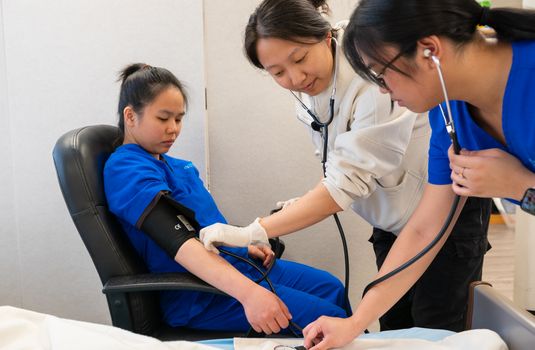
Not every first aid certificate meets the standard for clinical work. For regulated healthcare professionals in Ontario, BLS is the certification that employers expect. Nurses, paramedics, and physicians are the clearest examples, and BLS is described as the mandatory standard for those roles. If you work in direct patient care, a general CPR Level C certificate usually will not satisfy your employment contract.
Other responders benefit from the same training. The Hamilton course is designed for anyone who needs current Basic Life Support certification, including dental professionals, respiratory therapists, medical office staff, and students entering health programs. Employers across the province increasingly list BLS on job postings because the course teaches team-based response rather than single-rescuer skills.
The safest step is to read your job posting or employment contract carefully. Look for terms such as BLS, BLS Provider, or BLS for Healthcare Providers. If the posting is unclear, ask your supervisor which certificate they expect before registering for a class.
What you will learn in a BLS for Healthcare Providers course
A BLS course is not simply a longer version of a public CPR class; it is a different course with a clinical focus. Participants build the knowledge and confidence to perform high-quality CPR in a wide variety of settings. The content includes the Chain of Survival, which outlines every step from early recognition of cardiac arrest to the care a patient receives after their heart restarts.
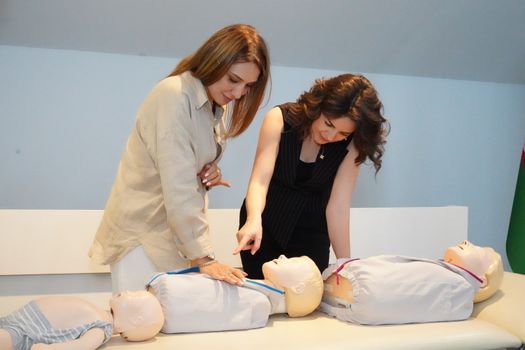
The classroom experience also differs. Courses are delivered in a team environment where professionals practise together, and experienced trainers help you gain both skill and confidence as you perform cardiopulmonary resuscitation. By the end of the session, you should feel ready to act as part of a coordinated response rather than as an isolated rescuer. Key areas of focus include:
- Performing high-quality CPR in a range of settings
- Understanding the Chain of Survival and how each link affects outcomes
- Using effective team dynamics during a resuscitation
- Building the confidence to respond as a professional healthcare provider
The one-year renewal cycle and blended course options
BLS certification is valid for one year. That short cycle exists because healthcare providers are expected to stay current with accepted guidelines and maintain their practical skills at a professional level. Renewing every year keeps your protocols and techniques fresh, but it also creates scheduling pressure around shift work and family commitments.
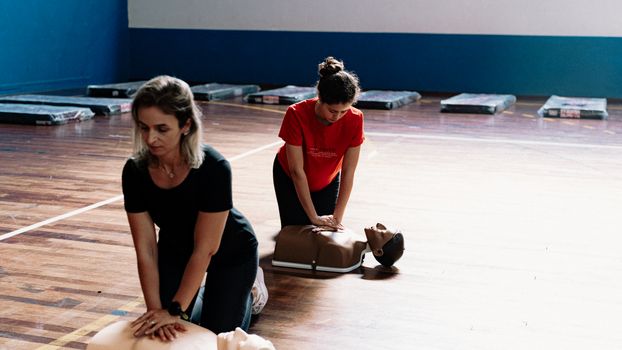
Blended training helps with that pressure. Several providers in the region offer BLS courses that combine an online component with an in-class session. The theory portion is completed at your own pace, and the classroom time is reserved for hands-on skills practice and evaluation. For nurses, paramedics, and emergency responders who renew every year, this format reduces time away from work without lowering the quality of the hands-on assessment.
How to choose a BLS provider in Hamilton
The quality of your training depends on the provider you select. Look for a school that is a Canadian Red Cross-certified training partner, since Canadian Red Cross first aid and CPR courses are delivered through a network of approved Training Partners. A recognized provider helps confirm that your certificate will be accepted across Ontario workplaces.
Aspire First Aid Guide Training offers BLS and CPR options in the region and follows the Canadian Red Cross curriculum. If you are ready to move forward, review the BLS for Healthcare Providers course details and compare the schedule with your work rotation. Confirm the course format, the length of the in-class portion, and the expiry date on the certificate before you register.
Frequently Asked Questions
These are the questions Hamilton healthcare workers ask most often when comparing BLS and CPR certifications.
Is BLS harder than CPR Level C?
BLS demands more from participants because it is aimed at professionals. You learn high-performance CPR, team dynamics, and response coordination, so the in-class session is more intensive. Most healthcare workers find BLS straightforward if they already understand CPR basics. The bigger adjustment is remembering that BLS renewal happens every year rather than every few years.
Do nurses need BLS or CPR Level C?
Nurses in Ontario are regulated healthcare professionals, and their employers normally require BLS for Healthcare Providers rather than a public CPR Level C certificate. BLS is considered the gold standard for patient care roles and covers the team-based skills used in hospitals and clinics. If you are starting a nursing program or a new job, confirm the exact requirement with your school or employer before registering.
Is BLS the same as the old HCP course?
Yes. BLS is the current name for the training that many people still call HCP, or Health Care Provider. Ontario course listings often display names like CPR BLS (formerly HCP) so returning students recognize the course. If your employer or regulatory body asks for HCP, registering for a current BLS for Healthcare Providers course will normally satisfy that requirement.
How long does a BLS certificate stay valid?
BLS certification is valid for one year from the date you complete the course. Because the cycle is short, many providers offer blended renewal options that let you finish the theory online and practise hands-on skills in class. Mark your expiry date on your calendar and plan to renew before it passes, since many employers require a current certificate at all times.
Can I complete BLS fully online?
Most reputable providers use a blended model for BLS because CPR skills need practical evaluation. You can complete the theoretical portion online, but the in-class component remains important for hands-on assessment. Some employers do not accept a course with no in-person skills session. Check the course format with your training provider and confirm its acceptance with your employer before you enrol.