
If you work security in Ontario, or you are preparing to apply for a licence, first aid is not a side detail. The provincial training syllabus for security guards includes a section dedicated to emergency-level first aid certification, and it is Section 12. That requirement shapes what course you book, what certificate you keep on file, and how often you renew it. Miss the details and you can stall a licence application or get pulled off a worksite roster. Here is what Section 12 actually asks for, how the certification levels compare, and how to book training that satisfies both the regulator and your employer.
What Section 12 of the Security Guard Syllabus Covers
Ontario publishes a training syllabus for security guards, and Section 12 is titled Emergency-level first aid certification. In plain terms, the basic 40-hour security guard course is not only about legislation, use of force, note taking and report writing. You are also expected to hold current emergency-level first aid certification.
Training providers commonly list a valid first aid certificate as part of the requirements for the 40-hour Basic Security Guard Training Course. Some providers bundle the two together, pairing a Ministry-approved security guard course with Canadian Red Cross Emergency First Aid and CPR/AED Level C certification so that applicants complete both before writing the provincial exam. Bundling is convenient, but the underlying rule is the same either way: the first aid certificate has to be real, current and from a recognized course.
Which First Aid Level Does a Security Guard Need?
Emergency First Aid with CPR and AED training is the baseline described by Ontario training providers for security guard work. The exact CPR wording does vary between sources. Some material describes Emergency First Aid with CPR Level C and AED as the requirement, while other sources describe CPR A as the minimum and note that many employers prefer Standard First Aid with CPR Level C, because Level C covers adults, children and infants and includes two-rescuer CPR.
Because the phrasing shifts depending on who you ask, do two things before you register. Ask the employer or agency that will hire you which card they want to see, and check the current syllabus wording on ontario.ca. A short phone call or email now saves a re-booking later.
Emergency First Aid and Standard First Aid Compared
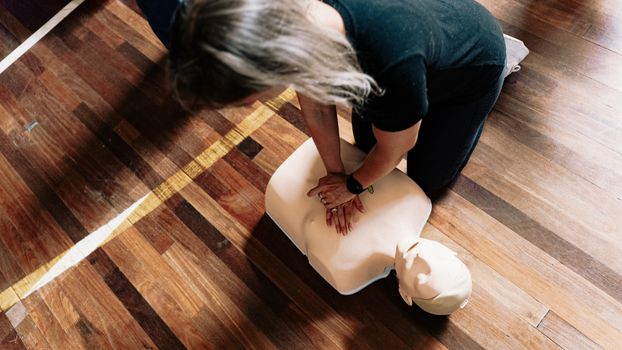
The two certifications overlap, but they are not the same course. The table below outlines the practical differences for someone working in security.
| Feature | Emergency First Aid with CPR/AED | Standard First Aid with CPR/AED |
|---|---|---|
| Core focus | Immediate response to critical situations: CPR, AED use, choking, severe bleeding and other life-threatening emergencies | Broader first responder skills, including secondary surveys and handling a wider range of injuries and illnesses |
| Typical course length | Varies by provider, confirm the hours and format when booking | Commonly delivered as a two-day course, including on-site delivery |
| Licence relevance | The emergency-level certification described in Section 12 of the syllabus | Exceeds the minimum and is often preferred by employers |
| Certificate validity | Certificates are valid for 3 years | Certificates are valid for 3 years |
Why Guards Actually Use These Skills
Security work puts people at the front edge of an emergency. A guard may be the first person to reach a collapsed shopper in a concourse, a worker down on a loading dock, or a guest in distress at an event gate. The minutes before paramedics arrive are the minutes that matter, and they are exactly what Emergency First Aid training is built around.
Section 12 treats first aid as a base competency rather than an optional extra. Employers rely on that certification when they write post orders, respond to client requirements and manage workplace safety obligations. Training that is WSIB approved, such as the Canadian Red Cross certificate courses offered by recognized providers, gives an employer documentation they can file and defend.
How Long Your Certificate Lasts
Red Cross certificate courses that meet the Ontario Security Guard Licence requirement are described as valid for 3 years. That expiry date belongs on your calendar, not in a folder you open once a year. Guards who let a certificate lapse can find themselves unable to work certain posts until they recertify, and a gap is easier to avoid than to explain.
A practical habit is to note the expiry date on the day you receive the card and book your renewal before it closes in. Blended delivery makes that easier to fit around rotating shifts than a single fixed classroom date.
In-Class, Blended or On-Site Training
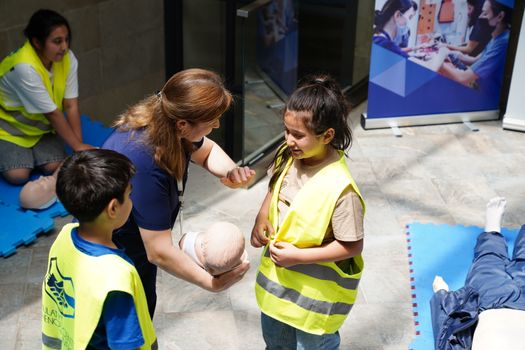
Blended courses combine self-paced online theory with an in-class session for the hands-on skills. For guards working nights, split shifts or on-call rotations, that flexibility often decides whether training actually gets finished. The practical portion still happens with a certified instructor, working through compressions on manikins, AED use, choking response and bleeding control.
Organizations with a full team to certify can look at on-site delivery instead of sending everyone to a public class. Standard First Aid, for example, is commonly offered as a two-day on-site course that covers first responder skills such as secondary surveys and handling a range of injuries and illnesses. That format keeps a whole crew on the same standard and reduces the scheduling shuffle.
What to Expect on Course Day
The in-class portion is active, not a lecture. Plan for the following:
- Wear comfortable clothing you can kneel and move in, because CPR practice happens low to the floor on training manikins.
- Expect to practise with an AED trainer and to work through choking and bleeding scenarios in small groups.
- Tell your instructor about any injury, pregnancy or mobility limitation so they can adapt the practice for you.
- Ask your provider in advance what identification or documentation they need on the day, rather than assuming.
Book Your Emergency First Aid Certification
Aspire First Aid Guide Training is a Canadian Red Cross-certified training provider serving Mississauga, Hamilton and St. Catharines, Ontario. The course catalogue covers Emergency First Aid and Standard First Aid with CPR-C, CPR/AED-only certification, Basic Life Support for healthcare providers, Marine First Aid and Mask Fit testing. Courses run in class or in a blended format that pairs online learning with hands-on practice, which suits security professionals who need certification that meets workplace and regulatory standards without giving up a week of shifts.
If you are working through the licensing process or an employer has asked for an updated card, check the current schedule and reserve a seat. Bring your questions about CPR level and certificate expiry to the booking conversation, and you will walk into class knowing exactly which card you are leaving with.
Frequently Asked Questions
Is Emergency First Aid the same as Standard First Aid?
No. Emergency First Aid focuses on immediate, life-threatening situations such as cardiac arrest, choking and severe bleeding, and includes CPR and AED training. Standard First Aid goes further, covering secondary surveys and a wider range of injuries and illnesses, and is commonly delivered over two days. Standard First Aid meets and exceeds the emergency-level requirement, and many security employers prefer it.
How long is my first aid certificate valid for?
Canadian Red Cross certificate courses that meet the Ontario Security Guard Licence requirement are valid for 3 years. The expiry date is printed on your certificate, so record it somewhere you will see it and book a renewal course before it lapses. Recertifying early is simpler than explaining a gap to an employer or client site.
Can I complete the theory portion online?
Yes, blended courses combine online theory with an in-class session. You work through the knowledge component at your own pace, then attend class for the hands-on skills: compressions on manikins, AED use, choking response and bleeding control. The practical portion is completed with a certified instructor, which is what makes the certification credible to employers.
Do I need first aid before I can take the 40-hour security guard course?
Training providers commonly list a valid first aid certificate as part of the 40-hour Basic Security Guard Training Course requirements, and many bundle the security guard course with Red Cross Emergency First Aid and CPR/AED Level C. Confirm the order and the paperwork with your chosen provider before you register so nothing holds up your exam booking.
Which CPR level should a security guard take?
Sources describe the requirement in different ways, so confirm before booking. Some material lists Emergency First Aid with CPR Level C and AED, while other sources describe CPR A as the minimum and note that many employers prefer Standard First Aid with CPR Level C. CPR Level C covers adults, children and infants, which is useful on public-facing posts.