

Whether you’re an employer ensuring WSIB compliance or an individual confirming your qualifications for a new job, the process of validating a Canadian Red Cross certification can feel unnecessarily complex. The frustration of navigating the MyRC portal, the anxiety over an impending expiration date, and the confusion between Participant IDs and Certificate Numbers are common, time-consuming challenges. If you need a clear, professional answer for how to verify a Red Cross certificate, this guide provides the definitive solution for 2026.
In the following sections, we provide a step-by-step walkthrough of the official validation process. You will learn precisely how to confirm the status of any First Aid & CPR certificate, troubleshoot the most frequent portal errors, and understand the critical differences between various certification levels. Our goal is to empower you with the knowledge to not only successfully verify a certificate today but also to confidently manage renewals and maintain compliance for the future. Let’s eliminate the uncertainty and get started.
Key Takeaways
- Understand the critical link between certificate validation and Ontario’s WSIB Regulation 1101 to avoid significant fines for non-compliance.
- Learn precisely how to verify a Red Cross certificate using the official MyRC portal with just two key pieces of information from any trainee’s card.
- Discover the most common reasons for a “Certificate Not Found” error and learn the exact steps to resolve it, even when there are reporting delays.
- Find out the eligibility criteria for recertification and the proactive steps to take before your certificate expires to ensure you remain certified without interruption.
Step-by-Step Guide to Using the MyRC Validation Portal
Verifying the authenticity of a Red Cross First Aid or CPR certificate is a straightforward and secure process designed for both individuals and employers. The official online validation portal is the definitive tool for this task, providing instant confirmation of a certificate’s status. This system ensures that the credentials presented are legitimate and current, upholding the high standards of certified training programs. Using this dedicated portal is the most reliable method for how to verify a Red Cross certificate and avoid fraudulent documents.
For a visual guide on accessing your digital certificate, which contains the necessary information for verification, watch this helpful video:
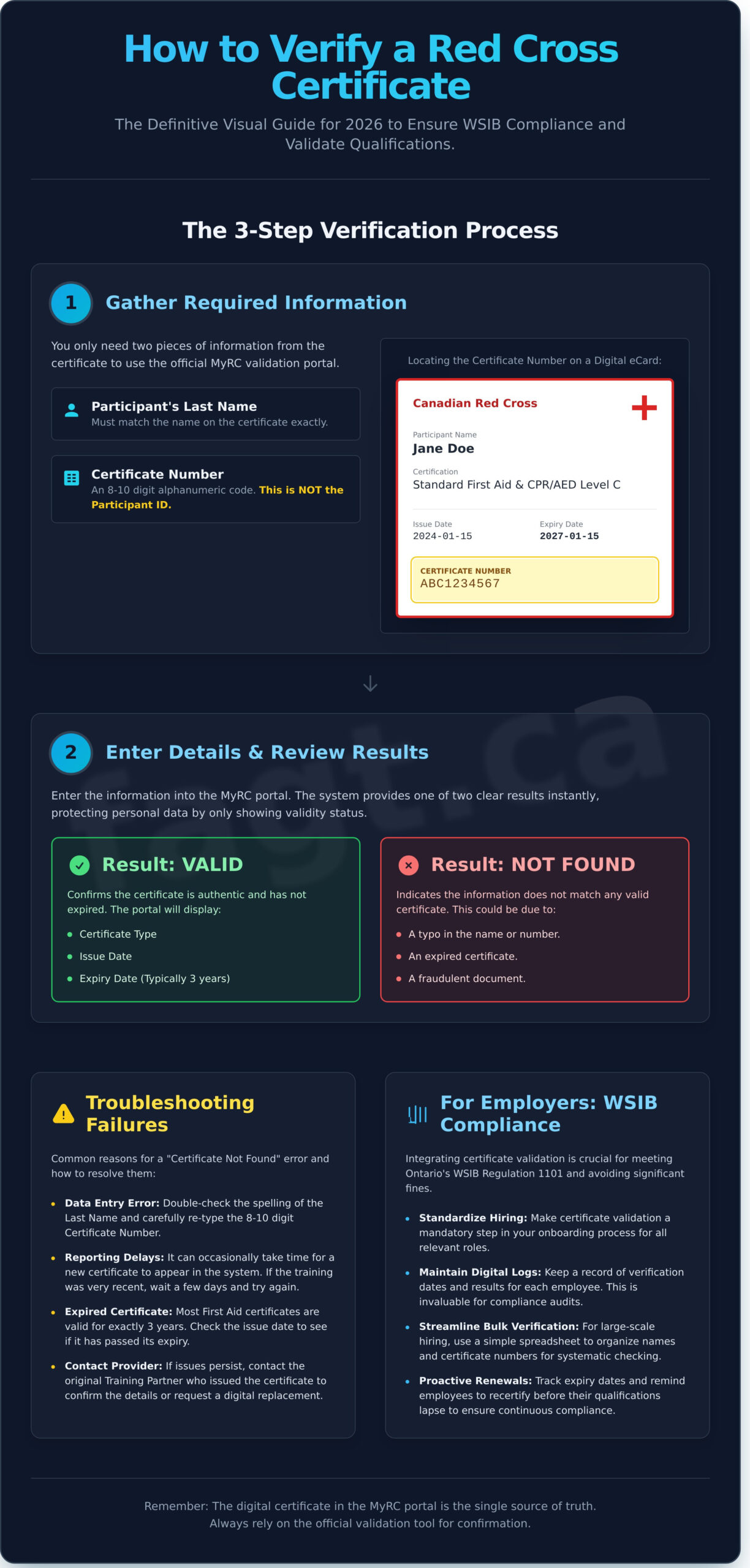
To perform a search, you only need two pieces of information: the participant’s last name and their unique Certificate Number. Upon entering these details, the system provides one of two clear results:
- Valid: This status confirms the certificate is authentic and has not expired. The result will display the certificate type, issue date, and expiry date.
- Not Found: This indicates that the information entered does not match any valid certificate in the database. This could be due to a typo, an expired certificate, or a fraudulent document.
Regarding privacy, the portal is designed to protect personal information. A successful search only reveals the holder’s name, the validity of their certification, and its expiry date, without disclosing any private contact details.
Locating Your Certificate Number
Your Certificate Number is an 8-10 digit alphanumeric code essential for verification. On digital (PDF) certificates, it is prominently displayed, often near the top. It is crucial to distinguish this from a Participant ID, which is a different identifier. If a physical certificate is damaged, the holder should contact the original training provider who issued it to request a digital replacement or confirm the number.
The Validation Process for Employers
For HR departments, integrating this validation step into the hiring process is a critical best practice. When verifying credentials for new hires, it is advisable to maintain a digital log of the verification date and results. This record is invaluable for compliance and can be essential during audits by relevant regulatory bodies. For bulk hiring, create a simple spreadsheet with names and certificate numbers to streamline the process, entering each one systematically into the portal.
Understanding Your First Aid Certificate: Components and Validation Data
A Canadian Red Cross first aid certificate is more than a piece of paper; it is a formal record of competency recognized by workplace safety boards and professional organizations across Canada. This document serves as verifiable proof that you have met a national training standard. As a recognized Training Partner, Aspire First Aid Guide Training Corp facilitates this training and ensures your successful completion is officially logged in the Canadian Red Cross national database. The credibility of this system is why Red Cross training is widely accepted for meeting compliance standards, similar to how it aligns with stringent OSHA training requirements in the United States.
Most certifications, including Standard First Aid, are valid for exactly three years. This is not an arbitrary date; it reflects established best practices for skill retention and ensures first aiders remain current with the latest protocols. While a printed certificate is useful, the official and most current record is always the digital version accessible through the MyRC portal. In 2026 and beyond, the digital certificate holds primary authority.
Key Details Found on a Valid Certificate
To ensure authenticity, a valid certificate must contain specific, non-negotiable details. These elements confirm its direct link to the Canadian Red Cross national registry and legitimize the training you received. Cross-reference these key components on any certificate you need to validate:
- Full Name of Participant: The name must match the individual’s official record in the Red Cross system.
- Specific Course Level: Clearly states the certification earned, such as “Standard First Aid with CPR/AED Level C” or “Basic Life Support (BLS)”.
- Official Branding and Signatures: Features the official Canadian Red Cross seal and the signature or digital credential of the certified instructor who led the course.
The 2026 QR Code Integration
The modern answer to how to verify a red cross certificate instantly is the integrated QR code. This feature, now standard on all new certificates, provides a direct, secure link to your official record. Simply scan the code with a smartphone camera to be taken to a unique validation page. This system embeds security features to prevent fraud by linking to a single, unalterable record. For your security, always confirm that the URL in your browser after scanning begins with https://myrc.redcross.ca/. Any other destination should be considered fraudulent.
Troubleshooting Verification Failures: Why Your Certificate Is Not Found
Encountering a “Certificate Not Found” error when you attempt to validate your credentials can be a significant roadblock, especially when a job or compliance requirement is on the line. The process for how to verify a Red Cross certificate is designed to be direct, but this error typically points to one of three issues: a simple data entry mistake, a processing delay between the training partner and the national database, or a technical glitch with your browser.
Before assuming the record is missing, it is essential to systematically review the information you have entered. A small discrepancy is the most common reason for a search failure. Carefully re-examine your digital or physical certificate and try the verification process again, paying close attention to every character.
Common Data Entry Mistakes
The Red Cross MyRC validation portal requires an exact match to locate a record. Even a minor typo will result in a failure. Before seeking further assistance, double-check your submission for these frequent errors:
- Character Confusion: Scrutinize the certificate ID for common character substitutions, such as confusing the letter “O” with the number “0”, or the letter “I” with the number “1”.
- Incorrect Date: Ensure you are entering the certificate’s issue or validation date, not the date you attended the training course.
- Name Mismatches: The name must be entered exactly as it was provided during registration. Using a nickname, an abbreviated first name (e.g., “Mike” instead of “Michael”), or omitting a middle initial that was used on the official form will prevent the system from finding your record.
When to Contact Your Training Partner
If you have confirmed your data entry is correct, the issue may stem from a reporting delay. Training Partners are responsible for uploading class rosters to the Red Cross national database. It is standard practice to allow up to 10 business days for records to sync after your course concludes. If this period has passed and your certificate is still not found, it is time to contact your provider directly.
As your Training Partner, Aspire First Aid can investigate the delay and assist with any necessary record corrections. For urgent employment needs, such as proving compliance with Ontario’s First Aid Requirements (Regulation 1101), we can issue a formal letter of completion to serve as manual verification while the database issue is resolved.
WSIB Compliance: Why Ontario Employers Must Verify Training
In Ontario, maintaining a safe workplace is not just a best practice-it is a legal obligation mandated by the Workplace Safety and Insurance Board (WSIB). Under Regulation 1101, employers are required to ensure their first aid personnel are trained by a WSIB-approved provider. For this reason, knowing how to verify a Red Cross certificate is a foundational component of regulatory adherence and risk management for any business.
Presenting a fraudulent or expired certificate is the same as having no certificate at all in the eyes of an inspector. This oversight can lead to severe consequences, including substantial WSIB fines, stop-work orders from the Ministry of Labour, and increased liability in the event of a workplace accident. It is crucial to distinguish between comprehensive training from an approved provider like the Canadian Red Cross and generic, online-only courses that fail to meet provincial standards. Proper verification is your only defence during a safety audit.
Maintaining First Aid Station Compliance
A key requirement of Regulation 1101 is that a worker with a valid first aid certificate is always available at the workplace. Verification ensures the designated first aider on duty holds a current, legitimate certification. This process also serves as a vital administrative tool, helping safety managers track expiry dates and schedule timely recertification training. A documented history of compliance and verified training can positively influence your workplace safety insurance premiums by demonstrating a commitment to a proactive safety culture.
Standard vs. Emergency First Aid Verification
Compliance goes beyond simply having a certificate; it requires the correct level of training for your specific environment. When you verify a certificate, you must confirm the training level matches your workplace needs as defined by WSIB:
- Emergency First Aid & CPR/AED Level C: Typically required for workplaces with five or fewer employees working on any one shift.
- Standard First Aid & CPR/AED Level C: Required for workplaces with six or more employees on any shift.
Furthermore, specialized environments have unique needs. For example, verifying Basic Life Support (BLS) certification is critical for healthcare settings in Mississauga and across Ontario. The process of how to verify a Red Cross certificate must include checking for these specific qualifications, ensuring your team is prepared and your business is protected.
Maintaining Your Certification: Renewals and Training with Aspire First Aid
A valid Red Cross certificate is a testament to your life-saving skills, but its validity is finite. Proactively managing your renewal is essential to remain compliant, confident, and prepared. We recommend beginning your recertification process approximately 90 days before your current certificate expires. This provides ample time to find a suitable course and avoid any lapse in your qualifications, which is critical for both personal readiness and workplace compliance.
To be eligible for a shorter Red Cross recertification course, you must hold a current, non-expired certificate in the same discipline from the Canadian Red Cross. For busy professionals in Hamilton, our blended learning format offers the ideal solution. This model combines flexible online theory modules with a condensed, in-person practical session, minimizing time away from work while delivering the comprehensive, hands-on skills training you need.
Choosing an authorized Canadian Red Cross Training Partner like Aspire First Aid is the most critical step in this process. Authorized partners have direct access to the Red Cross database, meaning your new certification is registered immediately upon successful completion. This direct link eliminates delays and simplifies the answer to how to verify a Red Cross certificate for you or your employer, ensuring your record is instantly accessible and valid.
Booking Your Recertification in Mississauga or Hamilton
Aspire First Aid offers WSIB-approved recertification courses at our convenient Mississauga and Hamilton locations. To ensure a streamlined process, please bring the following to your class:
- Your current (unexpired) Canadian Red Cross certificate
- A piece of valid government-issued photo ID
Upon successful completion, you will receive your new digital certificate via email-often before you even leave our facility-ready for immediate verification.
The Future of First Aid Records
Canada’s first aid training industry is moving towards a fully digital, paperless system. Your My Red Cross (MyRC) online profile is your permanent, secure hub for all your certifications. Keeping your profile updated ensures you have lifetime access to your training history. This digital record is the definitive method for how to verify a Red Cross certificate and manage your qualifications long-term. Stay ahead of the curve by ensuring your skills and your records are always current.
Ensure your skills remain sharp and your certification stays valid. Book your next WSIB-approved course with Aspire First Aid today and experience a seamless, professional training and renewal process.
Ensure Compliance and Empower Your Team
Verifying your team’s credentials through the Red Cross MyRC portal is a foundational step in maintaining a safe and compliant workplace. As this guide has demonstrated, the process is straightforward but essential for meeting Ontario’s WSIB requirements and ensuring your first aid responders are genuinely qualified. Understanding how to verify a Red Cross certificate is the first step; maintaining those qualifications is the next.
Don’t let an expired certificate compromise your safety standards. As a leading WSIB-approved Red Cross training partner, Aspire First Aid is dedicated to providing professional, accessible training. With convenient locations in Mississauga and Hamilton and flexible blended learning options for fast certification, we equip your employees with the skills they need to act confidently in an emergency. Take the definitive step towards workplace safety and compliance by investing in the best training available.
Ensure your team is WSIB-compliant-Book a Red Cross course at Aspire First Aid today.
Frequently Asked Questions About Red Cross Certificate Verification
Can I verify a Red Cross certificate without the certificate number?
For security and privacy reasons, direct public verification without a certificate number is not possible. The certificate number is the primary identifier for a specific training record. If you are the certificate holder but have lost the number, you can retrieve it by logging into your My Red Cross (MyRC) account. Your profile contains a complete history of your certifications and their corresponding numbers, which you can then use for official verification purposes.
How long does it take for a new certificate to appear in the MyRC portal?
The time frame depends on the Training Partner that conducted your course. Instructors are required to submit the course roster to the Canadian Red Cross for processing. Typically, you can expect your digital certificate to become available in your MyRC account within 5 to 10 business days after your course completion date. If your certificate has not appeared after this period, your first step should be to contact the Training Partner directly to confirm they have submitted the records.
What should I do if my name is spelled incorrectly on my Red Cross certificate?
If you find a typographical error in your name, you must contact the original Red Cross Training Partner who delivered the course. They are responsible for managing and submitting participant data. Provide them with the course date and the correct spelling of your name. The Training Partner will then make the necessary correction in the system, which will automatically generate a new, updated digital certificate for you in your MyRC portal.
Are American Red Cross certificates valid for work in Ontario?
Generally, American Red Cross certificates do not meet the specific legislative requirements for workplaces in Ontario, as mandated by the Workplace Safety and Insurance Board (WSIB). Canadian provinces have unique occupational health and safety regulations that are met by Canadian Red Cross programs. To ensure compliance, employers require certification from a WSIB-approved provider. It is always best to complete your training with a recognized Canadian provider for employment in Canada.
Is an online-only first aid certificate verifiable through the Red Cross portal?
Yes, certificates earned from official Canadian Red Cross online-only courses, such as Psychological First Aid or Opioid Harm Reduction, are verifiable through the portal. However, it is crucial to understand that these courses do not satisfy provincial workplace regulations for mandatory first aid training, which require a hands-on skills component. Online-only certifications are for knowledge and awareness, not a substitute for practical, in-person or blended first aid training required for employment.
What happens if my Red Cross certificate has expired?
An expired certificate is no longer valid and will not be accepted for workplace or regulatory requirements. While a record of the completed training will remain in your MyRC profile, it will be clearly marked as expired. To maintain a valid certification, you must successfully complete a recertification course before your current certificate’s expiry date. If it has been expired for too long, you may be required to take the full course again rather than a shorter recertification class.
How can I download a PDF copy of my verified certificate?
To access a printable PDF of your certificate, log in to your My Red Cross (MyRC) account online. Once logged in, navigate to the “My Certifications” section. This area will display a list of all your current and past training records. Locate the valid certificate you need and select the option to view or print it. This will generate an official digital copy of your certificate that you can save to your computer or print for your records.
Do I need to verify my instructor’s credentials as well?
No, it is not the participant’s responsibility to verify the instructor’s credentials. All Canadian Red Cross instructors undergo a rigorous certification process and must be affiliated with an authorized Training Partner to teach courses. The process of learning how to verify a Red Cross certificate for yourself or an employee is sufficient, as a valid certificate confirms the training was delivered by an approved source and meets all national standards for quality and content.
